

By Abbinaya Kuzhanthaivel
Connected fleets rely on a steady flow of vehicle data for tracking, dispatch and compliance. As data residency requirements take hold, where that data is stored is becoming part of how fleet technology is built and operated.
In conversation with Tech Arabia, Aliaksandr Kuushynau, Head of Wialon, discusses how Saudi Arabia’s localisation requirements are changing infrastructure decisions for fleet technology providers, the practical challenges of moving live fleet operations and the potential for more aligned data frameworks across the Gulf.
For fleet technology providers, data residency can determine whether they qualify to bid for certain projects, particularly in fuel distribution, hazardous materials and public transport.
“Being able to say where the data physically sits decides whether a provider gets to bid on certain projects at all,” Kuushynau says.
He expects localisation to become a standard requirement rather than a competitive advantage. The more immediate change, however, is how providers meet that requirement without taking on the cost and work of building and running their own infrastructure.
A different model
Setting up local infrastructure requires more than buying hardware. Providers must manage security, maintenance, backup and recovery, and the capacity needed to support growing fleets.
For smaller providers, these responsibilities can mean significant investment before a service goes live. “That is months of work and capital spent before the first invoice,” Kuushynau says.
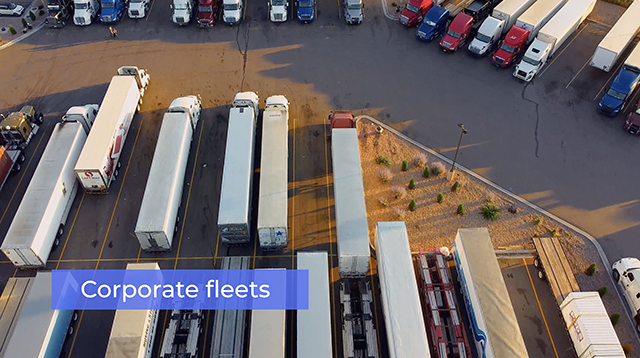
Wialon offers fleet management solutions to millions of vehicles
Localisation is also changing the competitive landscape. Global platforms serving multiple markets have to balance country-specific requirements with demands from elsewhere, creating an opening for local providers that already understand the country’s regulatory and operational environment. For instance, Wialon’s model does not directly compete with the local providers using its platform. The provider retains the customer relationship, pricing and service responsibilities.
Kuushynau says Wialon has supported this model through Wialon Local, which has been deployed on-premise in Saudi Arabia for years. In-country cloud follows the same approach while reducing the infrastructure that local providers have to build themselves.
Keeping migration easy
Moving data to a local environment brings a different set of challenges when vehicles and the systems monitoring them must continue operating throughout the transition. “The technical migration is usually the part people worry about, and usually the part that goes fine. The harder problems are the ones around it,” Kuushynau says.
Fleet operations cannot simply be stopped while a migration takes place. Trucks continue operating, dispatchers continue monitoring vehicles and compliance feeds still need to arrive.
The migration therefore has to be planned around the customer’s operations.
.jpg)
Localisation is changing the competitive landscape
Connected systems create another layer of complexity. Dispatch platforms, ERP systems, fuel-card providers and the national WASL platform all need to continue working through the transition.
There is also a customer-facing element to localisation. Providers need to explain where customer data is now stored and how the new environment works. “That sounds trivial. It is the conversation that decides whether the customer feels the change was handled well,” he said.
Keeping fleet secure
Local hosting does not eliminate the work involved in keeping a fleet platform secure and available. A local deployment still needs security controls, monitoring, backup and recovery, along with enough capacity to handle additional vehicles. For providers running their own servers, that also means taking care of patching, physical security and disaster recovery.
In-country cloud can move much of that responsibility to the cloud provider. But keeping data in one country also creates a different resilience consideration. “Concentrating everything in a single country is a different risk profile from a distributed setup,” Kuushynau highlights.
For providers, that means meeting local residency requirements without losing the resilience that comes from a wider infrastructure footprint.
For many fleets, however, the more immediate issue is not where AI runs but the quality of the data it has to work with.
“AI is only as good as the data underneath it,” Kuushynau notes. He points to device configurations, naming conventions and consistent data feeds as basic areas that still need attention.
A regional direction
Looking ahead, Kuushynau expects the next phase of data localisation could extend beyond individual countries.
His expectation is that neighbouring markets could use Saudi Arabia’s experience as a reference when developing their own frameworks. Greater alignment could make it easier for technology providers to operate across borders and for fleets travelling between Gulf markets to work within more familiar rules.
“The groundwork for it is being laid in the Kingdom right now.”