

By Abbinaya Kuzhanthaivel and Abdulaziz Khattak
Tech Mahindra, a global tech consulting and digital solutions leader, is increasingly focused on applying AI to specific business processes and developing specialist models that can deliver measurable economic and operational value, says Shyam Arora, Chief Technology Officer at Tech Mahindra.
Speaking to Tech Arabia at LEAP 2026, Arora said the company is increasingly focused on applying AI to specific business processes and developing specialist models that can deliver measurable economic and operational value.
The approach reflects Tech Mahindra’s broader strategy of bringing its global technology capabilities into Saudi Arabia while building a stronger local presence around customers, talent and delivery.
Arora believes the next stage of enterprise AI adoption will increasingly require specialised models rather than relying on a single general-purpose model for every task.
Large frontier models are already being used widely to create efficiencies, particularly in IT services. But when AI is applied to specific business processes, he argues that domain-specific models can deliver greater economic and operational value.
“For processes, it is more the domain-specific models which are required by the world to start making a difference to how they would be able to economically create value using AI,” he said.
That calculation includes the cost of tokens used during training and inference, as well as the ability of a model to produce a clearly defined outcome for a particular process.
Tech Mahindra is developing domain models across sectors including telecommunications, banking and financial services, and health and life sciences, while working with customers on specific use cases rather than offering a one-size-fits-all AI deployment.
Making a business case
The transition from AI experimentation to production is also exposing a gap between investment and returns.
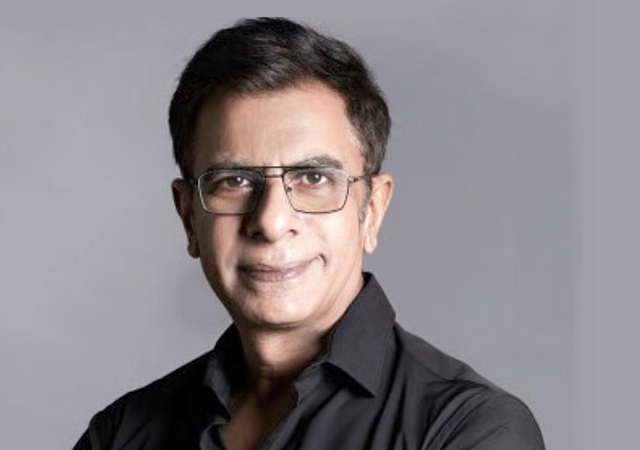
“We are seriously committed to Saudi and making sure that we are part of the ecosystem. We’re not seen as an external company” – Shyam Arora
Arora cited discussions with Gartner indicating that a large majority of companies deploying agentic systems were not yet achieving the return on investment they had expected.
He believes part of the problem is that companies have moved rapidly from pilots into production without sufficiently examining the processes they are trying to automate.
Organisations need to consider the right talent and training, the processes to be addressed, the level of human involvement required and the cost of running AI systems.
“You’re not just automating the wrong process. You are thinking through what is the process,”
Arora said.
The question is also whether a process should be assisted or autonomous, and whether the economics make sense.
“Unless you start appreciating that it is not a one-model-solves-all-problems, you need very specific models to solve specific use cases,” he said.
Measurable outcomes
Tech Mahindra’s focus, Arora said, is ultimately on business outcomes rather than technology deployment for its own sake.
In one financial services example, a company operating in 100 countries had been processing claims, expense claims and invoices through a global hub. Because policies and procedures varied between countries, processing could take more than 10 days on average. Tech Mahindra developed an agentic AI system trained on the relevant policies, local procedures, benefits and contracts. According to Arora, around 90% of invoices are now processed straight through.
The company is also applying AI to manufacturing through digital twins and physical AI.
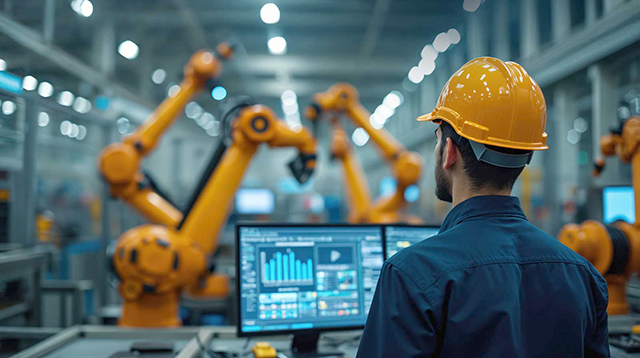
Tech Mahindra is focused on business outcomes rather than technology deployment for its own sake
Working with NVIDIA on Omniverse, Tech Mahindra creates digital twins of manufacturing processes, allowing companies to model different scenarios before implementing them. The technology can then support automation through robots and collaborative robots, as well as predictive and proactive maintenance.
Rather than servicing equipment according to arbitrary fixed schedules, AI can help determine the point at which maintenance is economically optimal.
“For us, it’s not just about, am I creating a technology outcome for you? I’m interested in creating business outcomes for you,” Arora said.
Building sovereign AI
Trust is another important element of Tech Mahindra’s AI strategy, particularly as organisations deploy AI more deeply into business and public-sector processes.
Arora said AI systems need controls around hallucinations, data and privacy, but stressed that trust cannot be treated as a one-time feature.

“You have to make sure that there’s a complete feedback loop that is built in so that on an ongoing basis, you can ensure that trust is working,” he said.
Human accountability also remains essential.
“You cannot blame a model or a machine if something goes wrong,” Arora said. “You need to make sure that there are accountable people in the chain who are taking responsibility for the outcomes.”
Tech Mahindra is also working on sovereign AI deployments, including building sovereign models and deploying them using local infrastructure and GPUs before applying them to specific use cases.
The company is involved in citizen-service applications and other public-sector processes, including work aimed at simplifying access to public assistance and legal processes.
Commitment to Saudi Arabia
Tech Mahindra is also making serious efforts to deepen its presence in Saudi Arabia.
The company already has deep relationships across energy, telecommunications, infrastructure and the public sector, while expanding specialist teams and developing local talent.
“We are seriously committed to Saudi and making sure that we are part of the ecosystem. We’re not seen as an external company,” Arora said.
The company has specialist delivery teams based in Saudi Arabia and is training local nationals as it develops its workforce in the Kingdom.
“We are training some of the local nationals here, specifically to make sure that we are able to keep up the overall workforce and have a huge amount of grooming being done of the local workforce,” Arora said.
For the company, localisation is therefore not simply about establishing a physical presence. It is about building the capabilities required to support customers locally and becoming part of the wider technology ecosystem.
“We bring a lot of strengths that we have created globally, working with several clients and over the years, into Saudi Arabia, but we want to be part of the ecosystem here,” he said.