

By Abbinaya Kuzhanthaivel
Gulf organisations are moving quickly from AI experimentation to active deployment, but scaling AI is beginning to expose gaps in infrastructure, data governance and operational readiness. As enterprises deploy generative and agentic AI across business functions, managing the data, applications and workloads behind those deployments is becoming a bigger challenge.
In conversation with Tech Arabia, Debojyoti Dutta, Chief AI Officer at Nutanix, says: “Organisations that have modern, cloud-native architectures are moving faster from pilot projects to production, while those that don’t are discovering that fragmented data environments and legacy infrastructure is slowing AI adoption significantly.”
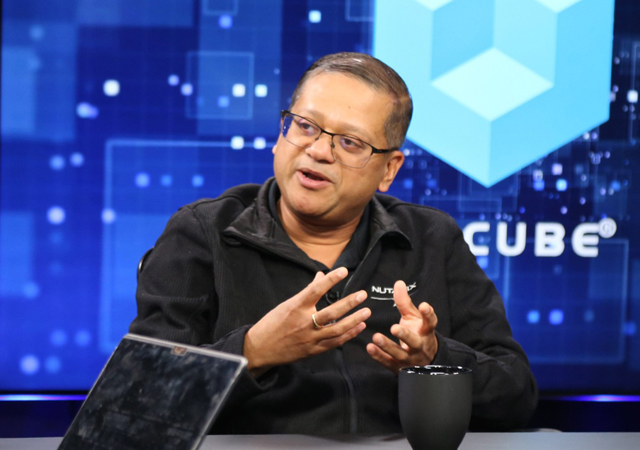
Debojyoti Dutta
According to Dutta, the challenge is not a lack of AI ambition. Rather, AI requires a different level of data accessibility, portability and operational consistency than traditional applications.
“The next phase of AI success will depend less on access to models, and more on the ability to securely manage data, applications, and infrastructure across hybrid environments,” he says.
Shadow AI adds to the risk
Business-led AI adoption is also making governance more difficult, with employees increasingly using AI tools independently of established IT controls.
Dutta says organisations risk exposing proprietary information, customer data and intellectual property when employees upload information to AI services that sit outside established governance controls. “Many organisations underestimate how quickly sensitive information can leave approved environments when employees begin using AI tools independently.”
For Gulf organisations, data sovereignty has become more complex as AI models, training data and inference environments may reside across different clouds and jurisdictions. Organisations therefore need visibility not only into where data is stored, but also how it is accessed, processed and shared.
Dutta says organisations need to address unsanctioned Shadow AI activity while providing employees with approved AI services that meet security and compliance requirements. The goal, he says, should be to enable innovation while maintaining visibility and control.
Data sovereignty goes beyond where data is stored
“Data sovereignty today is increasingly about governance, control, and accountability rather than physical location alone,” Dutta notes. Data may be stored in one environment, processed in another and accessed by applications running elsewhere. Organisations therefore need to understand the entire lifecycle of their data and AI workloads, including questions around jurisdiction, access controls, regulatory compliance and auditability.
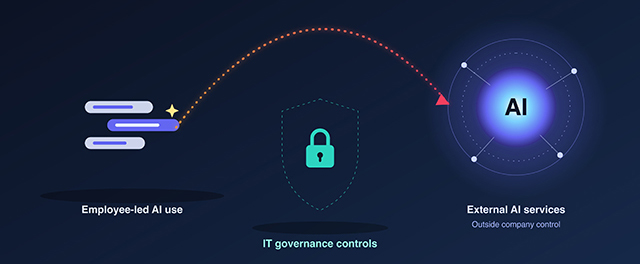
Employees are increasingly using AI tools independently of established IT controls
“Effective AI governance therefore requires a comprehensive view across infrastructure, applications, models, and data rather than treating each component separately,” Dutta says.
Governance, he adds, cannot be treated as a one-time exercise. “The governance process must be auditable to give a verifiable account of actions to regulators and others. It must also be an ongoing activity rather than a ‘one and done’ action point.”
Hybrid cloud can help if governed consistently
Hybrid and multicloud environments can give organisations greater flexibility, resilience and control over where workloads and data reside. For regulated industries, that flexibility can be valuable when addressing data-residency and compliance requirements. However, managing multiple platforms can create additional complexity when each environment operates with different security and governance practices. Dutta says organisations need common management, security and governance frameworks across environments.
“When done correctly, hybrid multicloud can strengthen AI governance. When managed in silos, it can create additional operational challenges,” he says.

Nutanix ... a single platform and a unified experience
The same risk applies to AI deployments. Dutta warned that organisations could repeat mistakes made during previous waves of digital transformation by deploying isolated AI solutions within individual departments.
“Over time, this can lead to disconnected data, duplicated investments, and inconsistent governance,” he says. For organisations in the UAE, Saudi Arabia and across the wider Gulf, Dutta says AI adoption and the strengthening of infrastructure, governance and security foundations should happen in parallel.
“It should not be viewed as an either-or decision,” he says. “Organisations can and should advance AI initiatives while simultaneously strengthening the foundations that will support long-term
success.”
Production readiness, he adds, should be measured through operational and governance outcomes rather than infrastructure availability alone. This includes data quality, security controls, compliance processes, workload portability, scalability, resilience and the ability to consistently manage AI applications across environments.
Organisations should also be able to monitor AI usage, govern data access and support collaboration between IT and business teams. If they can scale workloads securely, maintain compliance and deliver reliable performance while retaining visibility and control, they are closer to true production readiness.
Operational maturity will shape AI
As AI deployments expand, Dutta says the ability to operate AI at scale will become increasingly important. “The difference will come down to operational maturity,” he says. Successful organisations, he says, will view AI as a business transformation initiative supported by modern infrastructure, robust governance and unified data strategies.
“AI alone will not create competitive advantage. The real differentiator will be an organisation’s ability to securely connect data, applications, and infrastructure across hybrid environments while maintaining control, compliance, and business alignment at scale,” Dutta concludes.