

Manufacturers have spent years connecting machines, production lines and industrial systems. But having access to operational data alone does not mean they can use it quickly enough to improve production, quality and maintenance.
In conversation with Abbinaya Kuzhanthaivel from Tech Arabia, Mohammed Khalifa, Managing Director of Digital Industries at Siemens Middle East, shares insights on why connected factories do not always translate into transformed operations, the barriers to scaling digital projects and how manufacturers can make better use of their existing technology.
“Most manufacturers don’t have a data problem. They have an action problem,” Khalifa says.
He explains that maintenance teams may spot early warning signs or production lines may show indications of a quality issue, but delays in acting on that information can limit its value.

‘Most manufacturers don’t have a data problem. They have an action problem’ – Mohammed Khalifa
“Ten years ago, the challenge was getting machines connected. Today, many manufacturers already have access to huge amounts of operational data. The challenge is using that data quickly enough to improve production, quality, and maintenance decisions,” he adds.
Industrial AI is starting to make a real difference by helping manufacturers turn operational data into faster decisions around production, quality and maintenance.
The pressure to act is growing as manufacturers face greater complexity, shorter product lifecycles and rising expectations around productivity and quality.
Khalifa says the distinction between conventional automation and intelligent operations lies in the ability to respond to changing conditions. While automation follows predefined rules, intelligent systems use data to identify patterns and recommend or take action based on real-time information.
Connecting engineering, automation, production and operations systems can help manufacturers trace quality issues to their source, reflect design changes in production and identify equipment problems before they affect output. The aim is to improve performance across the operation rather than optimise individual processes in isolation.
The challenge of scaling digital transformation
A successful digital project at one factory does not necessarily translate easily to other sites. Khalifa says manufacturers can encounter difficulties when expanding deployments because data standards, processes and systems vary between sites. “True adaptability requires data, automation, software, and operational technology to work together as part of a connected ecosystem,” he says.
Digital tools alone do not guarantee that working practices will change. Khalifa says some manufacturers continue to rely on spreadsheets, emails and manual handovers despite having sophisticated systems.
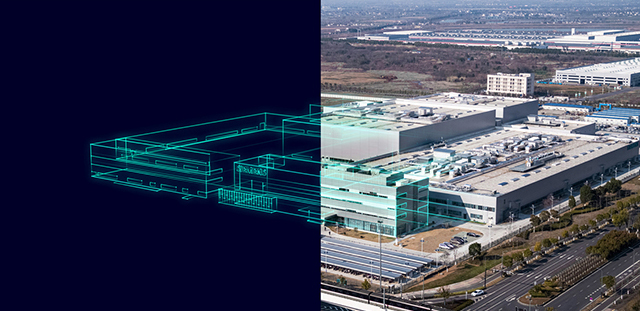
Data architecture should be a starting point for new factories
“Transformation happens when information flows seamlessly across teams and decisions are made differently because the data is available in real time.”
He also cautioned against treating digital transformation as simply the automation of existing processes. While automation can improve efficiency and consistency, greater gains may come from redesigning workflows and eliminating inefficiencies.
The same principle applies when designing new factories. Khalifa says data architecture should be a starting point, rather than machinery. Disconnected systems can make it difficult for teams to access critical information and coordinate decisions across engineering, production and maintenance. Differences in data standards and processes can also complicate the rollout of digital projects across multiple sites.
Cybersecurity, he adds, should also be built into connected industrial environments from day one, rather than treated as a separate layer added later.
Measuring the impact
Downtime is often the first area in which manufacturers see measurable returns from connected industrial operations, Khalifa says. Predicting equipment failures before they interrupt production can deliver immediate financial benefits, while earlier detection of quality issues can reduce waste and rework. Other potential gains include improvements in energy efficiency, maintenance performance and speed to market.
Industrial AI is also becoming part of operational workflows, helping manufacturers prioritise maintenance, adjust production schedules and identify quality risks. Khalifa says human oversight remains essential, with the technology intended to help people make better decisions faster, not replace their expertise.
For manufacturers, the test of digital transformation is whether connected systems and operational data lead to better decisions, more efficient processes and measurable improvements on the factory floor.